
Underwater Senior Portraits: The Complete Guide (2026)
Everything you need to know about underwater senior portraits in DFW: what they cost, how to prepare, what to wear, best poses, safety, and what the session actually looks like. Based in Frisco, TX.
Most senior photos happen in a field at golden hour. Those are great, and I shoot plenty of them. Underwater is the other option: a private pool, a dress floating around you, and lights under the surface. This guide covers what it costs, how to prep, what to wear, poses, safety, and what the session is actually like.
What are underwater senior portraits?#
Exactly what it sounds like: portraits shot under the surface of a pool. You wear something flowy, move slowly, and your hair and fabric float in ways you can’t fake on land.
It’s caught on with seniors who want something different from the usual field-at-sunset set. And yes, you’ll look cool.
It’s not just for seniors, either. Kids, athletes, couples, and grown adults book underwater sessions too. This guide is written for seniors, but almost all of it applies to anyone.
What an underwater session looks like#
If you’ve never done this, here’s how it goes, from booking to delivery.
The planning call#
Every underwater session starts with a conversation. We’ll talk through the look you want, your comfort level in water, and wardrobe ideas. This isn’t the kind of session you show up to cold. Everything gets planned out so we’re not burning your pool time figuring it out. Once we’ve got a date, a $100 booking fee locks it in. It counts toward your session, not on top of it.
Safety briefing#
Before anyone gets in the pool, we do a full safety walkthrough. This covers hand signals for communicating underwater, breathing basics (when to inhale, how to exhale through your nose), what each set will look like, and your personal limits. You decide how deep you go and how long you stay under.
I don’t skip this for anyone, including people who’ve done underwater sessions before.
The session#
Sessions happen in a private backyard pool here in the Frisco area. The water is shallow enough to stand in, and I bring underwater lights, so colors stay clean and bright instead of going murky green.
We shoot in short bursts, usually 5-10 seconds underwater at a time, with breaks in between. You go under, I shoot, you come up. Most seniors are surprised by how comfortable it is, and how fun. The whole thing runs about 60 minutes in the water.
Delivery#
Your 5 edited photos come back in a private online gallery within 7-14 days, and you can add more if five isn’t enough.
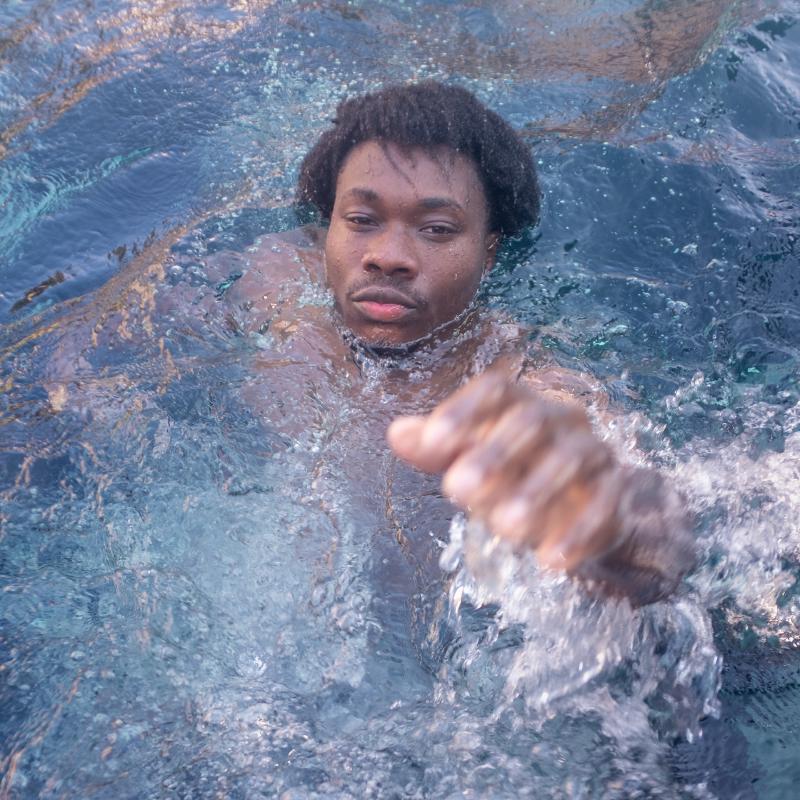
How to prepare for your underwater session#
You don’t need to be a competitive swimmer, but a few things make a real difference.
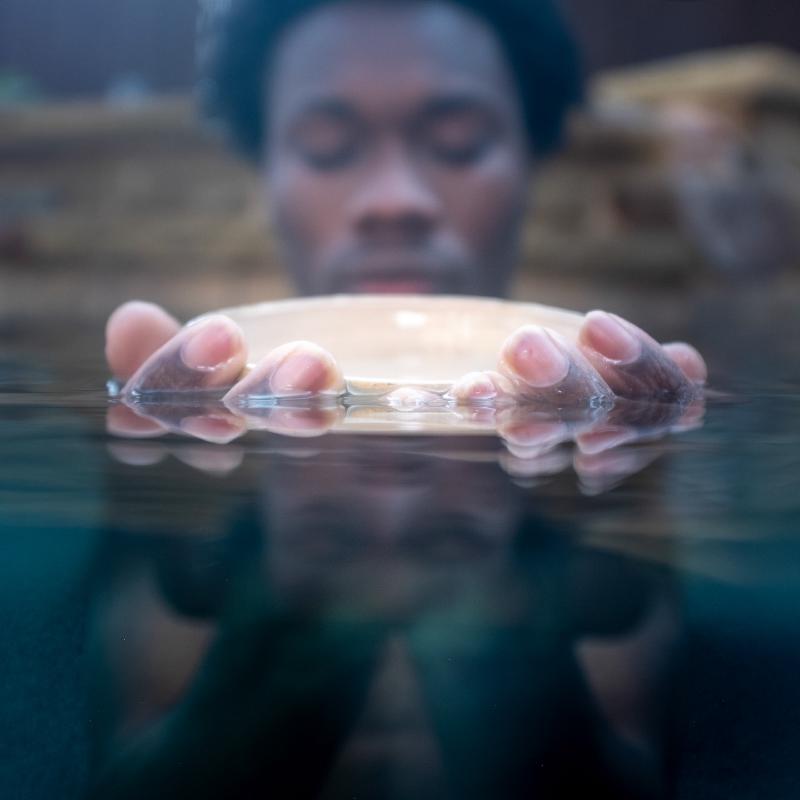
Get comfortable in water first#
You need to be comfortable putting your face underwater and holding your breath for a few seconds at a time. That’s the whole bar.
If you’re not super confident, spend some time in a pool before your session. Practice going under, opening your eyes, and relaxing your face. The more natural it feels beforehand, the better your expressions will look on camera. Even 15 to 20 minutes of practice helps.
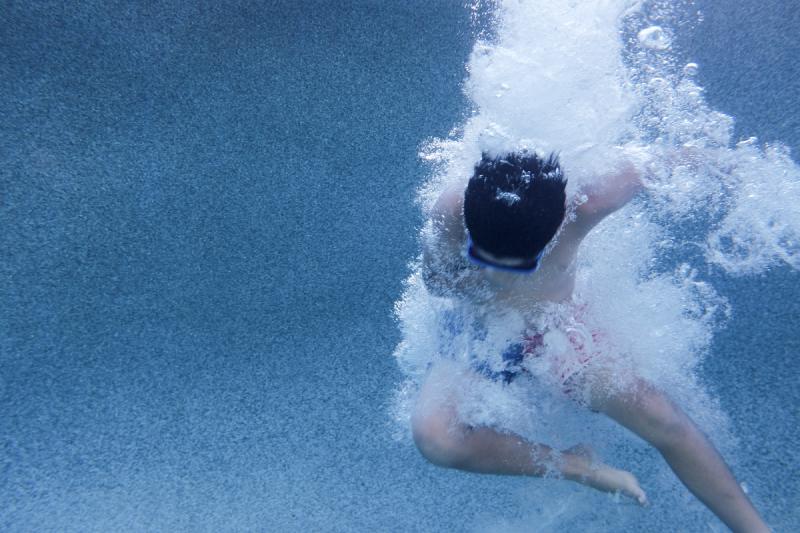
This is what practice looks like. My kids do the exact same thing, minus the posing.
Practice holding your breath#
Most sets are 5-10 seconds under, so you don’t need to hold your breath for a crazy amount of time.
A few things that help:
- Take a slow, deep breath before going under
- Exhale a tiny bit through your nose right as you submerge, which keeps water out of your nose
- Stay relaxed. Tension burns through your air faster
- Don’t push yourself. We take as many breaks as you need
Skin and makeup prep#
Sunscreen: skip it. It clouds the water almost right away and leaves a hazy film that shows up in photos. It’s a one-hour session, so you’ll be fine without it.
Lotion and oils: same deal. Anything on your skin transfers into the water. Come with clean, product-free skin.
Makeup: waterproof makeup is fine and actually holds up well. Waterproof mascara, setting spray, and lip stain all survive the pool. Skip powder-based products, which dissolve on contact.
What to bring#
- Your outfit or outfits, steamed and ready
- A towel, or two
- A dry change of clothes for after
- Waterproof makeup for touch-ups
- Hair ties and clips
What happens day of#
- Arrive and settle in. We go over the plan and do the safety briefing
- Get in the water. Start slow, get comfortable, warm up with easy movements
- Shoot in sets. Short bursts underwater with breaks between. We review shots together as we go
- Wrap up. Dry off, change, done
It goes faster than you’d think.
Mental prep#
It’s normal to be a little nervous the first time. That usually goes away once you see the first few frames on the back of the camera.
Don’t worry about looking perfect on every take. We shoot a lot of frames, and the best shots usually come once you stop overthinking and start having fun.
What to wear for underwater portraits#
Wardrobe matters more underwater than anywhere else. The right outfit floats. The wrong one just hangs there, heavy and soggy.
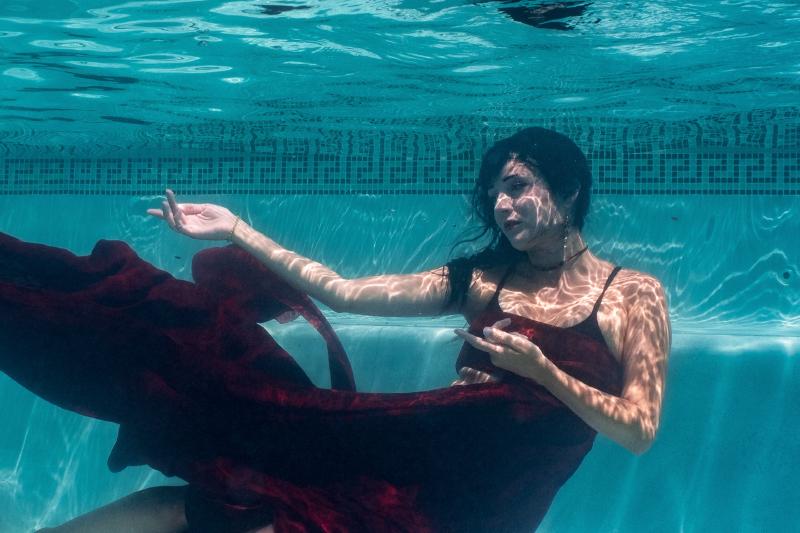
Flowing fabric in deep red is about as good as it gets. The water catches the fabric, and red is the opposite of the blue-green water behind it. That’s from Marie’s session.
Fabrics#
Light, flowy fabric floats and billows on its own. Heavy fabric sinks.
Go with: chiffon, tulle, silk or silk-like blends, lightweight cotton, organza.
Skip: denim or heavy cotton, structured blazers and stiff fabrics, leather or faux leather, anything with real weight when wet.
The goal is movement. If it flows when you spin on land, it’ll look even better underwater.
Colors#
Water has a natural blue-green tint. Your outfit needs to stand out against it, not blend in.
Best underwater: deep red, bright white, gold and warm yellows, rich emerald green, hot pink or magenta, and black for contrast.
Avoid: light blue or teal (disappears into the water), pastels (wash out), neon (reflects weird color onto your skin).
One thing worth knowing: red tones fade with depth, so in deeper water a red dress can shift toward purple. We shoot in shallow pools with professional lighting, so your colors stay true. But it matters if you’re planning around a specific shade.
Dresses and skirts are the move#
Long, flowing pieces create the most dramatic shots. The more fabric, the more flow. Think prom dresses, ballgowns, or a simple maxi skirt paired with a fitted top.
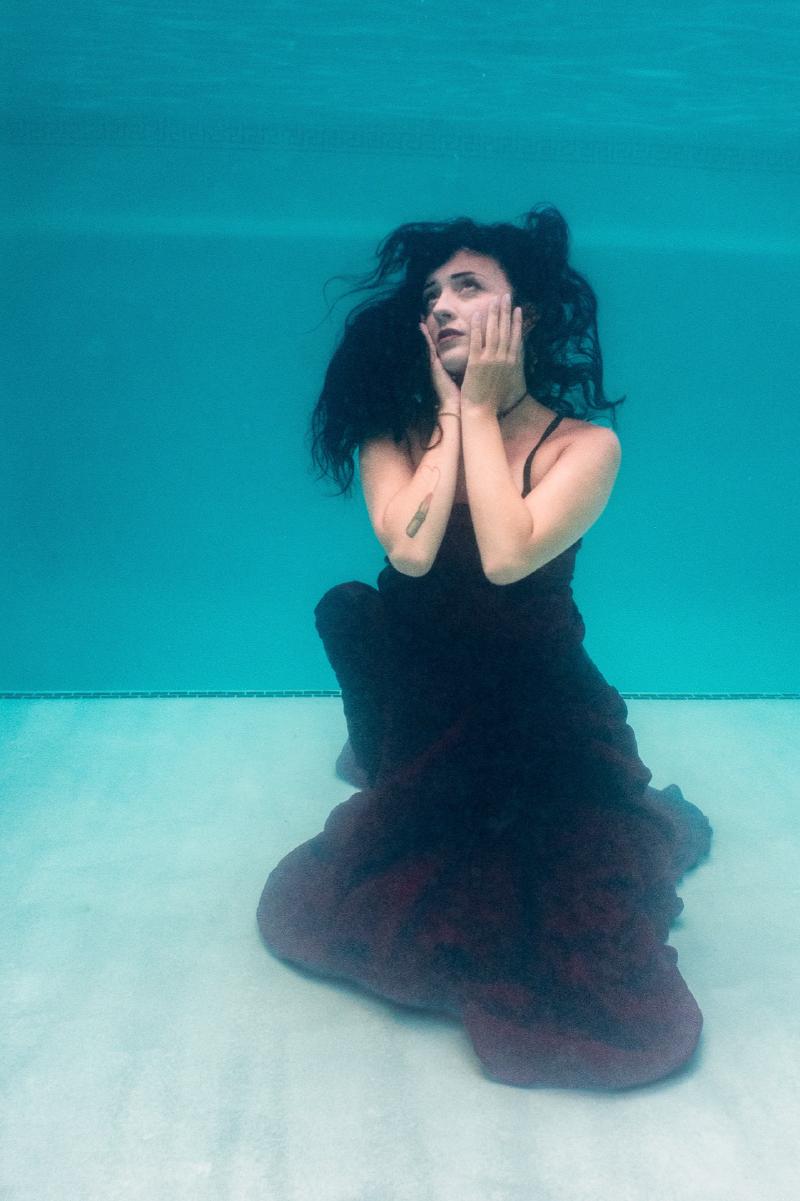
A long skirt does something on the pool floor that it can’t do standing up. All that extra fabric settles around you instead of hanging off you.
You don’t have to go formal. A flowy sundress or an oversized button-down over a swimsuit can look great too.
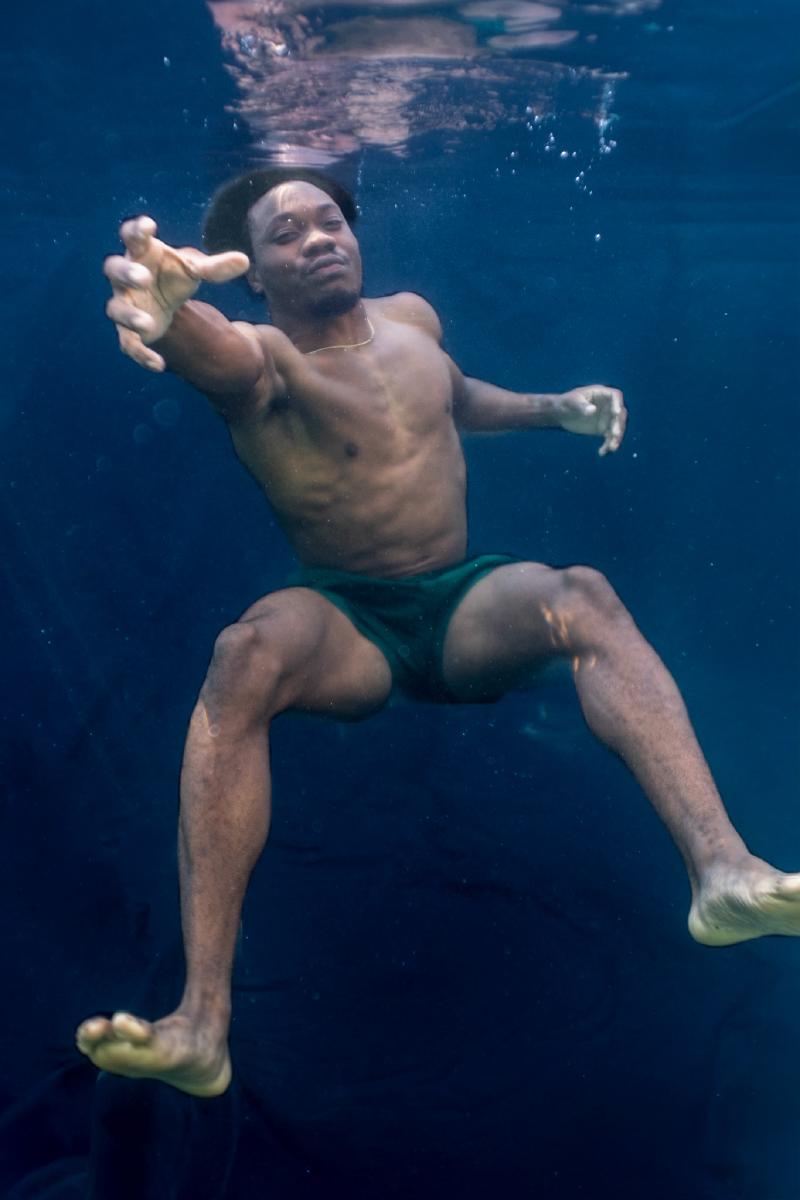
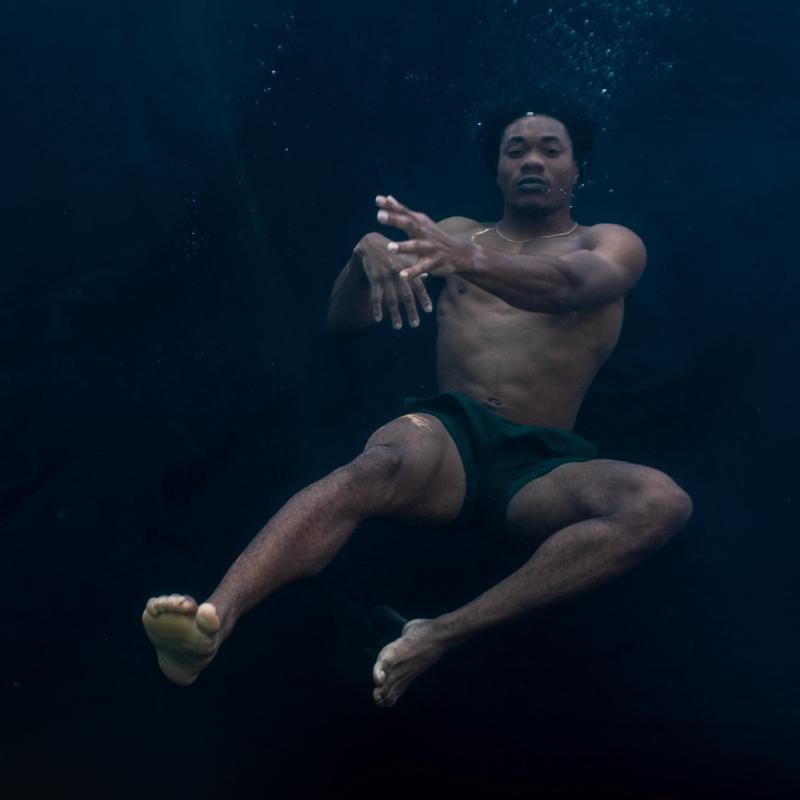
Swim trunks and nothing else, and it still holds up. Not every underwater portrait needs yards of fabric.
Hair dye and products#
This one matters. If you’ve had your hair dyed within the last two weeks, the color can bleed into the water and cloud everything up. Plan color appointments at least two weeks before your session.
Also skip heavy hair products like gel, mousse, or hairspray on session day. They cloud the water and leave residue in photos. Clean, product-free hair moves better underwater anyway.
Jewelry and accessories#
Keep it simple. A statement necklace or earrings can add a nice touch, but anything loose or delicate risks falling off and sinking. Skip rings and bracelets unless they’re tight-fitting.
Crowns, floral headpieces, and hair accessories work surprisingly well when they’re secured properly. We’ll talk through options during your planning call.
For kids, there are no rules#
Everything above is for styled sessions. If we’re shooting your kids, forget all of it. Regular swim trunks, goggles, whatever they already live in all summer. Those photos are about play, not wardrobe.
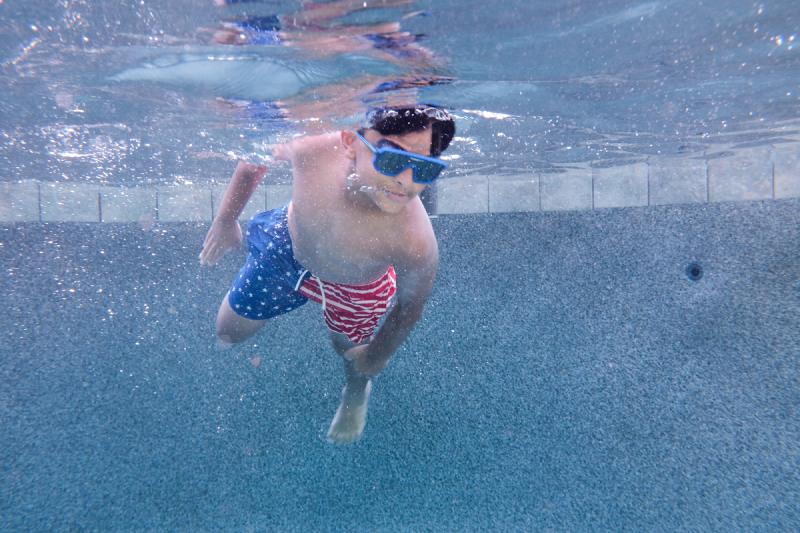
My kids wore flag trunks for a July 4th pool day and it’s some of my favorite underwater stuff I’ve shot. Pick whatever’s bold and comfortable, then let them play.
Quick wardrobe checklist#
- 1-2 flowy outfits (long dress, skirt, or loose top)
- Bold, solid colors
- No fresh hair dye, 2+ weeks before the session
- No heavy hair products day-of
- Simple, secure jewelry only
- Towel and a change of clothes for after
Poses that work underwater#
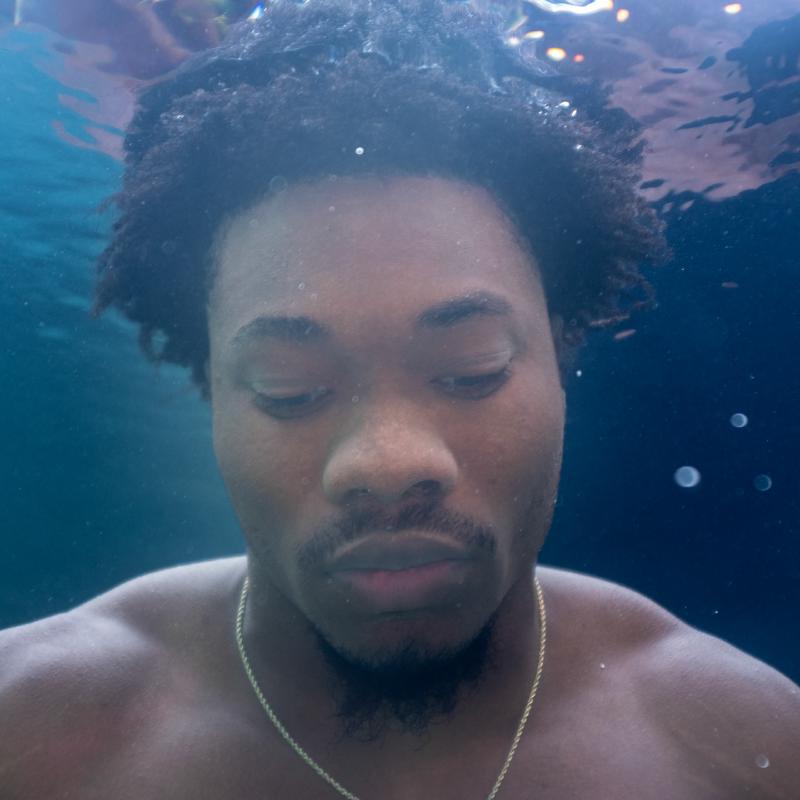
Posing underwater is nothing like posing on land. You float, everything moves slower, and what looks good on the ground can look awkward under the surface. Work with the water instead of fighting it.
The float. Arms out a little, body relaxed, fabric fanning out around you. It’s the classic underwater pose, and it works because you’re barely doing anything.
The reach. One or both arms reaching up toward the surface. It stretches your whole body out long, and with a flowy dress it’s usually a favorite.
The hair flip. Going from face-down to looking up sends your hair out in every direction. Dramatic, especially with long hair.
The backfloat. Lying on your back just below the surface with your arms out to the sides, with the light coming through the water right above you.
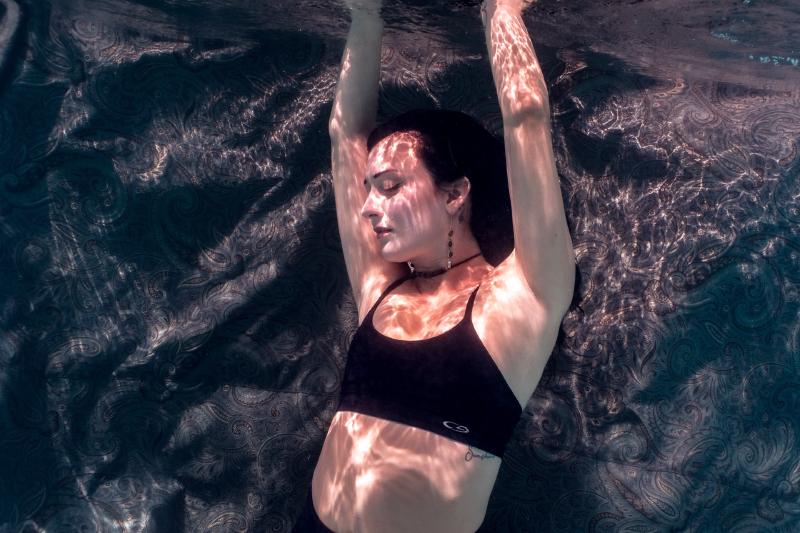
Stay shallow enough and the sun breaks across you through the surface. Free light, and it moves every second, so no two frames match.
The biggest tip: move slowly. Think ballet, not basketball. Fast movements photograph as blur and bubbles, slow ones come out graceful and editorial. And don’t worry if you’ve never posed underwater before. I coach you through every single pose during the session.
For the full list and what to avoid, see 5 underwater poses that actually work.
Is underwater photography safe?#
Short answer: yes, when it’s done right. Here’s how I run mine, and what you should expect from any underwater photographer.
The environment#
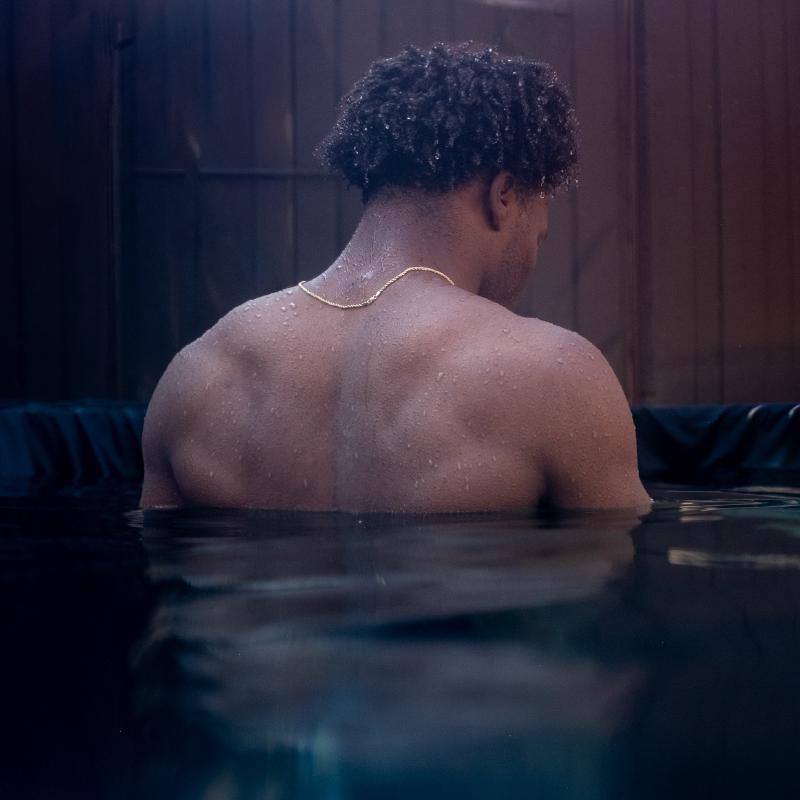
All sessions take place in a private backyard pool. The water is shallow enough to stand in, and you’re never more than a few feet from the edge. No open water, no scuba gear, and you’re in charge of how long you stay under.
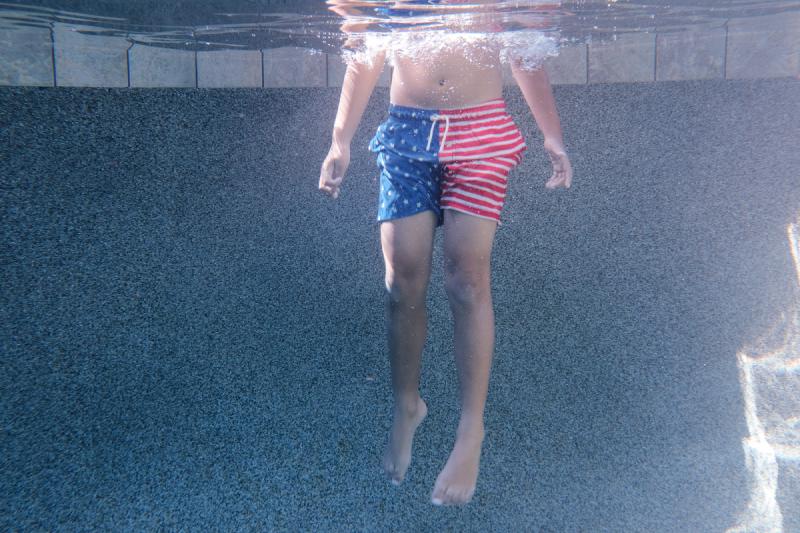
That’s my own kid in that photo, feet flat on the pool floor. I run client sessions the same way I run pool days with my own family, and for any session with a minor, a parent stays right there the entire time, poolside or in the water with them.
You control the pace#
You choose when you go under and when you come up, every time. Need a longer break? Take it. If something doesn’t feel right, we stop.
You don’t need to be a strong swimmer#
This is the question I get most, and it’s a fair one. No, you don’t. If you can put your face in the water and hold your breath for a few seconds, you’re good. The pool is shallow, you can stand up any time, and I’m in the water with you the whole session.
Water in your nose and eyes#
Breathe out gently through your nose as you go under and the water stays out. After a couple of takes you won’t even think about it. For your eyes, keep them relaxed and softly open, or closed for some poses. No goggles needed.
If any of it feels off during the session, we adjust.
Buoyancy and body comfort#
You float, and that’s what makes the weightless-looking poses work. A lot of people find it relaxing once they settle in.
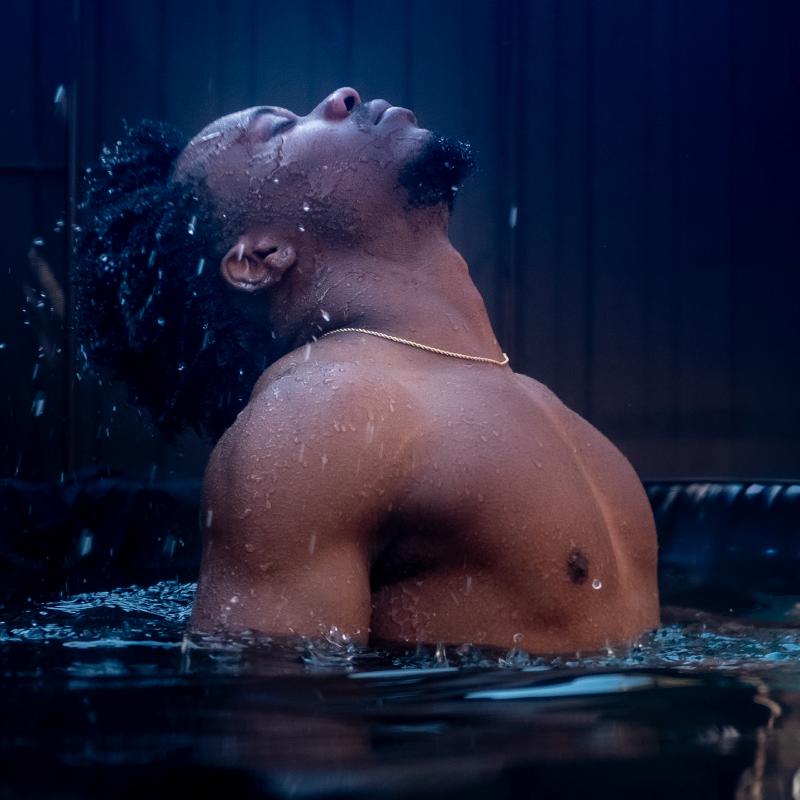
What your photographer should always do#
If you’re researching underwater photographers, here’s what to look for:
- A safety briefing before every session. No exceptions
- A shallow, controlled environment. Pools, not open water, unless they’re specifically trained for it
- Clear communication. You should know exactly what’s happening at every step
- CPR and First Aid knowledge. Anyone working in water should have basic emergency training
- No pressure. A good photographer will never push you past your comfort level
Most people get out of the pool saying it was way more fun and way less scary than they expected.
How much do underwater senior portraits cost?#
Underwater sessions are $750 flat and include:
- 60-minute session in a private pool
- Professional underwater lighting
- Safety briefing and creative direction
- 5 professionally edited photos
- 1-2 outfit options
- Private online gallery delivered in 7-14 days
A lot of seniors pair it with a full outdoor session. Booked together, that’s $1,000 instead of $1,150, and one round of planning covers both: the golden hour set and the underwater one.
FAQ#
How much do underwater senior portraits cost? $750 for a 60-minute session in a private pool. That covers the underwater lighting, a safety briefing, creative direction, and 5 edited photos delivered in 7-14 days. Pair it with a full land session and the combo is $1,000.
Do I need to be a strong swimmer? No. You need to be comfortable putting your face underwater and holding your breath for a few seconds. The pool is shallow enough to stand in, and we go at your pace with breaks between every set.
How long do I hold my breath? Most sets last 5-10 seconds underwater. We shoot in short bursts with breaks between each set, and you come up whenever you need to.
What should I wear? Something flowy in a bold solid color: chiffon, tulle, or silk, ideally a long dress or skirt. Skip denim, anything structured, and anything that gets heavy when it’s wet. For kids there are no rules. Regular swim trunks and goggles are perfect.
Should I wear sunscreen? No. It clouds the water and leaves a hazy film in the photos. Skip lotions and oils too, and come with clean skin.
Can I dye my hair before the session? Yes, just do it at least two weeks ahead. Fresh dye bleeds into the water and clouds everything. Also skip gel, mousse, and hairspray on session day.
Are underwater portrait sessions safe? Yes. It’s a shallow private pool, and everyone gets a safety briefing before they get in. You control the pace, we shoot in 5-10 second bursts, and you take breaks whenever you want. For any session with a minor, a parent stays right there the entire time, poolside or in the water with them.
Can I combine underwater with a regular senior session? Yes, and a lot of seniors do. Pair underwater with a full land session and the combo is $1,000 instead of $1,150.
Do my underwater photos have to be posted online? I post unless you tell me otherwise, so assume a few will. Say you’d rather they stayed off my site and my socials and they do. If you signed a release and later want a shot pulled, ask and it comes down. For anyone under 18, the parent has that same call.
Where do sessions take place? In a private backyard pool in the Frisco area. I bring the underwater lights.
Want to see a whole session? Dakota’s gallery and Marie’s are good places to start, and the underwater page has the rest of the details. For everything else I shoot, there’s the Frisco photographer page.
Underwater takes more planning than a land session, so if you’re thinking about one for next summer, message me early. Pricing is here.